The AI Your Company Approved May Not Be The AI Running Today
Most organizations now use AI. Far fewer may know what happens when the AI itself changes.
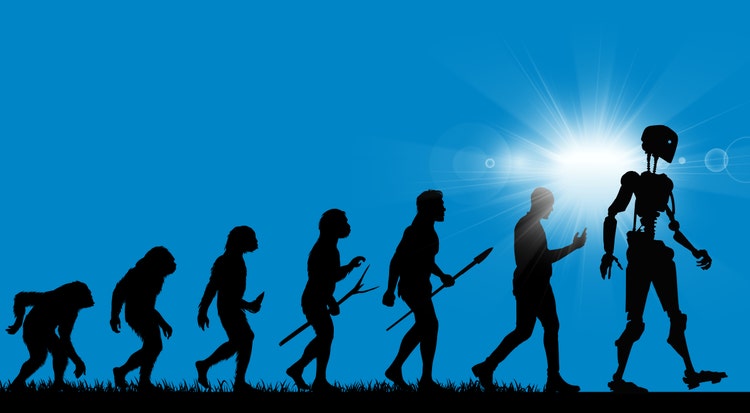
Anthropic's release of Claude Fable 5.1 highlights an emerging challenge for AI governance: The AI systems approved six months ago may not be the same system employees are using today.
According to Anthropic, Fable 5.1 introduces changes that matter to enterprise customers, including performance, pricing, safeguards and data-retention options. Yet employees may continue logging into the same AI assistant, copilot or business application without realizing that the model powering those services has changed
[RELATED: The Anthropic-Pentagon Standoff And The No. 1 Lesson For Midmarket IT Leaders]
However, any model can change without users necessarily noticing. Employees may still log into Claude, ChatGPT, Gemini or Copilot even as the technology operating underneath those services changes over time.
That raises important questions for IT decision makers: If an AI model changes, how will the organizations know? Who evaluates the impact? What happens if the update affects costs, system performance, security controls or user access?
Those challenges may be especially significant for midmarket organizations that consume AI through MSPs, MSSPs, SaaS applications and other third-party providers. In those instances, the customer may not select or control the underlying model. Providers can update or replace models powering security tools, chatbots, copilot or automated workflows while customers continue using what appears to them as the same service as always.
[RELATED: How Midmarket CIOs Can Reduce MSP Pricing Surprises]
The Visibility Problem
For many organizations, visibility into AI usage is already an issue.
"Application performance monitoring and observability are current challenges in midmarket when it comes to AI use," said Jeff Cratty, vice president of cloud and innovation at Blue Mantis in an email to MES Computing.
Cratty said organizations are increasingly struggling to understand AI consumption, evaluate return on investment and establish governance around how AI services are being used.
"This is most prevalent when customers consider their AI token consumption," Cratty said. "We're seeing a significant number of customers struggle to define a clear ROI, perform any type of governance over consumption, and attribute cost back to revenue across the board with both experimentation and production adoption."
In some cases, he added, organizations are experiencing five-figure monthly increases in subscription costs tied to AI adoption.
[RELATED: AI Usage, SaaS Billing Changes Mean Budget Headaches For Midmarket CIOs]
"This is a rapidly growing challenge for midmarket customers who are cost sensitive but also cannot afford to get left behind in the AI wave," Cratty said.
Model updates and changes can complicate matters as organization may not have clear insight into how those changes affect capabilities, costs, governance requirements and user experience.
When Model Updates Become Governance Events
Chris Lloyd, chief solutions and technology officer at manufacturing software vendor Syspro, said organizations should expect AI models to continue evolving rapidly.
"For midsize enterprises, visibility into the AI models powering their applications should be a baseline expectation," Lloyd said.
Organizations need to understand not only which model is being used, but also the complexity, cost and trade-offs associated with that choice, he said.
At the same time, Lloyd cautioned that constant change is likely to become a permanent characteristic of enterprise AI.
"Changing models are going to be a reality going forward," he said. "AI capabilities are evolving rapidly, and organizations will benefit from vendors continuously improving and updating the models that underpin their applications."
That reality makes visibility more crucial, according to Lloyd.
"The focus should not be on limiting change, but on managing it transparently," Lloyd said. "Customers should have visibility into when significant model changes occur, clarity about the impact those changes may have, and meaningful choice over the models being deployed within their environments."
A New Governance Challenge
Knowing an AI model's version may become as routine as tracking operating system releases.
Organizations have decades of experience managing software updates. However, AI introduces a new layer of complexity because the organization responsible for governing the technology may not be the organization controlling when the technology changes.
Ultimately, AI governance may start extending beyond policies and acceptable use guidelines into something resembling asset management, where visibility into the model version becomes as important as visibility into the applications those models power.