Nvidia's CEO Shake-Up: Supply, Pricing And Roadmap Questions For IT Buyers
Nvidia says its product roadmap and customer commitments will continue uninterrupted. But what could Jensen Huang's departure mean for the midmarket when it comes to GPU availability, AI infrastructure pricing and long-term technology planning?
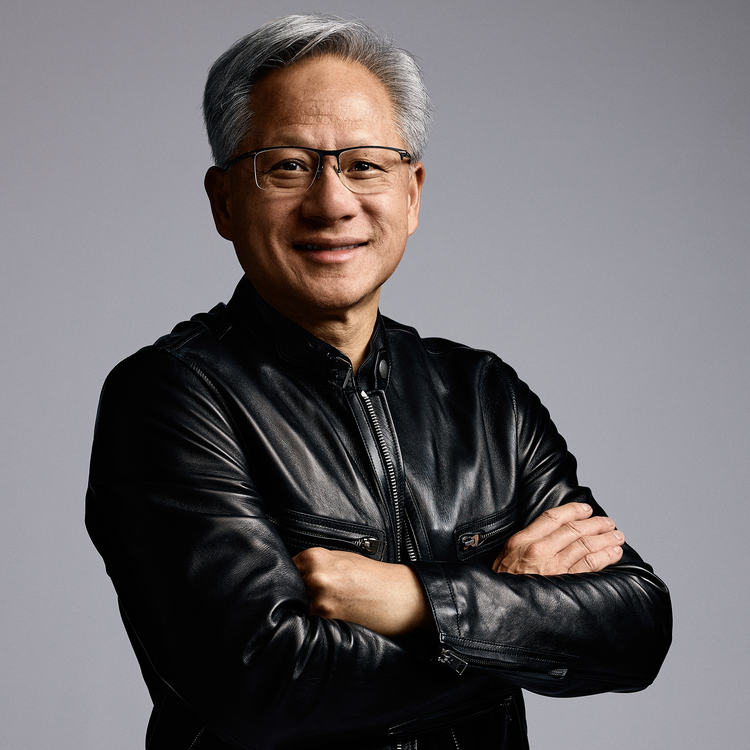
(Photo: Nvidia)
Nvidia co-founder Jensen Huang has resigned as president, CEO and a member of the company's board, effective immediately. The announcement follows days of scrutiny surrounding reports of Huang's personal relationships, though Nvidia did not give a reason for his resignation in its announcement.
Colette Kress, Nvidia's executive vice president and chief financial officer, will serve as interim CEO while the company searches for a permanent successor. Nvidia said it will consider both internal and external candidates.
Huang, who co-founded Nvidia in 1993, has achieved a rock-star status of sorts with the rise of artificial intelligence. More importantly for enterprise technology buyers, he has been central to Nvidia's transformation from a graphics-chip company known primarily for gaming into the company at the center of the AI infrastructure boom.
His departure therefore raises questions outside of Nvidia's executive suite. For IT leaders whose plans increasingly depend on Nvidia technology, directly or indirectly, does anything actually change?
Probably not tomorrow.
But Huang's sudden exit gives IT leaders another reason to consider how much their long-term AI strategies depend on a single vendor, architecture and pricing ecosystem.
3 Considerations For Midmarket IT Leaders
GPU Supply: Don't Assume Huang's Departure Means A Shortage. However ...
There is currently no evidence that Huang's departure will constrain GPU supply.
In fact, Nvidia's board specifically said it expects the company's "operations, customer commitments and product roadmap to continue without interruption."
That doesn't mean supply issues should be ignored.
Demand for AI infrastructure is already placing enormous pressure on the hardware ecosystem. Reuters, meanwhile, identified execution rather than the existing technology roadmap as a potential longer-term concern. ClearBridge Investments portfolio manager Michael Feldman described Huang as the "chief conductor" of a complex system involving suppliers, cloud providers and customers.
Perhaps for the midmarket, the thing to watch is whether changes eventually happen with availability, lead time of allocation through cloud providers, OEMs, MSPs and other partners.
Pricing: Watch Nvidia Costs Not Directly Invoiced By Nvidia
Most midmarket organizations aren't buying bundles of GPUs from Nvidia.
But that doesn't mean Nvidia's pricing and infrastructure economics have no impact on IT budgets.
Nvidia GPUs increasingly sit under cloud GPU services, AI SaaS offerings, managed AI services, private AI infrastructure, OEM servers and workstations, and solutions delivered by MSPs and other providers.
Could a leadership transition eventually change AI infrastructure pricing?
There's no evidence of that today. But the question is worth watching, particularly as the industry's hardware economics are already under pressure.
At Commvault SHIFT this week, Pranay Ahlawat, Commvault's chief technology and AI officer, highlighted an important contradiction in the AI market: AI itself is becoming cheaper while the hardware required to support it is becoming more expensive.
"AI is continuing to actually get cheaper. Hardware is actually continuing to get more expensive, and we are spending on AI infrastructure at levels that have never been seen before," he said during a keynote at the event.
Ahlawat pointed specifically to rising memory prices and massive hyperscaler spending on AI infrastructure.
It will be interesting to see how Nvidia-related costs move through cloud capacity, AI services, hardware and managed service contracts.
Product Roadmap: Short-Term Continuity, Longer-Term Questions
Nvidia says its product roadmap will continue without interruption. Analysts told Reuters that much of that roadmap is already visible for the next several years.
While midmarket leaders aren't likely planning to redraw their 2027 AI infrastructure plans because Huang resigned, it is worth pondering the longer-term ramifications.
Here's why: Huang wasn't just a CEO. He has played a substantial role in leading Nvidia's relationships across the entire AI ecosystem—from suppliers to cloud providers and customers. His hands-on leadership has led some analysts to question what his absence could mean for execution, even if Nvidia's existing roadmap remains intact, as Reuters reported.
There's a takeaway for midmarket IT leaders: No infrastructure strategy should assume one vendor's dominance, pricing or roadmap will remain predictable in five years.
3 Things Midmarket IT Leaders Can Do Now
Don't Panic-Buy GPUs
There is currently no evidence that Huang stepping down means a disruption in Nvidia's supply or customer commitments.
Ask Providers About Portability Before Signing Contracts
If an MSP, cloud provider or AI vendor proposes a multi-year architecture, ask what happens if Nvidia's infrastructure economics change. If Nvidia's pricing, products or availability change, how difficult would it be to move those AI workloads somewhere else?
Revisit Roadmap Assumptions, Not Deployed Infrastructure
There's little call of course, for ripping and replacing existing systems because Nvidia changed CEOs. But there is reason to distinguish between projects and contracts already committed for the next year or so and taking architectural bets that assume today's AI hardware market will look substantially the same within five years.
Nvidia's leadership has changed, just like that. The shakeup provides a good opportunity for IT leaders to ask whether their infrastructure plans can tolerate the one thing tech professionals are already familiar with: change.
MES Computing has reached out to Nvidia ecosystem partners, cloud infrastructure providers and MSPs for additional perspectives and will update this analysis as responses come in.