The AI-Driven Workplace Looks A Lot Like The Old One – Only Worse If You’re A Woman
AI is reassembling structural barriers to women at machine speed.
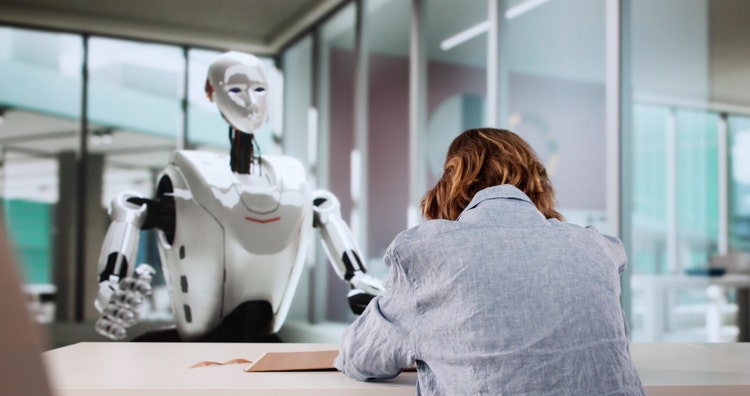
AI is deepening workplace gender inequality by disrupting women’s jobs, penalising female candidates and limiting women’s access to AI leadership.
We’ve heard a great deal recently about the existential risks that humanity may or may not face from AI in the years ahead, and there are plenty of good reasons to appraise the musings of Messrs Amodei, Altman, Hassabis et al with our critical faculties deeply engaged.
Chief among them is that all the above have used the same tactic they’ve been deploying since the end of 2022 which is to direct focus onto something that might happen at an unspecified point in the future to persuade people to overlook the very real harms that LLMs – or rather the organisations building and deploying them are causing right now.
Many of these harms, ranging from legal and financial liabilities, cybersecurity breaches, misinformation risks and what looks like an increasingly heavy psychological toll are not gendered. But some harms are experienced disproportionately by women.
Female Dominated Occupations Most Likely To Be Disrupted By AI
Occupations which skew female are already facing disproportionately high disruption from AI-driven automation. Administrative, business support and customer service roles are all areas that employ lots of women but are all being increasingly automated. Male dominated manual trades, less so.
Recent research from the International Labour Organisation (ILO) found that women faced higher exposure to generative AI driven disruption than men in 88% of the countries included in the study. In several economies, including that of the UK, more than 40 per cent of women’s employment is exposed to the technology.
You may argue that when it was mainly male dominated heavy industrial occupations that automation and economic reforms decimated in the eighties, those affected were simply told to suck it up, relocate, retrain in computing or simply parked on welfare for the rest of their lives. And you would have a point. Isn’t this simply the consequence of technological transformation that women are just going to have to adapt to? Roll with the punches, if you will.
Well, that adaptation is going to be harder for women than it is for men. Sheila Flavell, CBE, COO of FDM Group explains how automated recruitment workflows reinforce existing biases.
“AI tools do not have the discernment or judgement of actual human recruiters, who would evaluate genuine skills and experience needed for the role,” she says. “For example, a job ad can mention 10 years plus experience as essential criteria. A candidate who’s had a career break [which statistically women are far more likely to have had] could have the same experience in terms of skills and work scope but still be rejected by an AI tool because they don’t fulfil the 10-year criteria.
“This is why human oversight is essential at every stage of the hiring process, to ensure women returning to work are given the same opportunities as their male counterparts.”
Unfortunately, it’s the human oversight that more companies are dispensing with.
Women Are Punished For Using AI When Job Seeking
What if women take the path of polishing their CVs with generative AI to help them navigate these systems?
After all, the gender AI gap is well documented, with women being around 20% less likely to use generative AI than men. Is that reluctance to engage disadvantaging female jobseekers and women in the workplace more generally? Do women just need to <sigh> lean in, stop complaining and skill up?
You may recognise this scenario from earlier seasons of “Women in the workplace.” It’s an AI-washed version of the problem pinpointed by researchers more than a decade ago whereby human traits like confidence and persistence are perceived differently depending on the gender of the person exhibiting them.
Research indicates that – surprise! - the use of generative AI is perceived differently depending on the gender of the person using it. Code for Good Now showed 1000 UK adults the same AI-supported CV and told that the candidate had used AI. It was the same CV in all but one measure – half saw the name ‘Emily Clarke’ and half saw ‘James Clarke.’
Those who took part in this experiment were 22% more likely to question whether Emily could be trusted and twice as likely to doubt her competence. The language respondents used was brutal. Apparently, James "just needed a bit of help putting it together," whereas Emily “couldn’t even write a CV herself - not sure she has the skill to carry out the job."
So bad luck if you’re female jobseeker planning on using your CV to showcase your AI skills.
What About Promotion?
Women already in the workplace face greater structural barriers to leadership as a consequence of AI becoming embedded in the tools and processes involved in winning a promotion.
Liat Ben-Zur, former Microsoft CVP, AI adviser and author, argues in her book The Bias Advantage: How Unconventional Leaders Gain Power in an AI-Driven World that AI is disrupting the signals of trust and promotion in the workplace, and that this disruption makes it harder for women to make themselves heard. Ultimately, it’s about where power lies.
“Power in the AI era is going to increasingly belong to the people who are deciding where AI gets deployed, how AI gets deployed, what problems it’s used to solve,” she says. “Who are the leaders who decide when AI-driven recommendations, decisions and execution get challenged?”
“I think companies really have to take a close look at who gets consequential AI opportunities,” she says. “Who is leading the AI pilots? Who's getting assigned to the AI transformation project? Who's owning the budgets? Who's presenting the work from AI to senior leadership? Who is sitting on those AI governance committees? Who's getting promoted because they became associated with AI initiatives? That is really where careers get made.
“We have to take a very close look at the consequential AI opportunities alongside of training participation.”
Emily Steen, Applied AI Technical Lead at MSP Thrive gives her perspective on some of the structural barriers facing women seeking some of the power Ben-Zur speaks of, and provides some pointers for companies seeking more diverse leadership.
“From my own experience, confidence can be part of the challenge,” she says, “but confidence is shaped by environment. If technical spaces remain male dominated, women may have fewer opportunities to build relationships, gain visibility and develop their influence. Over time, that can affect who is trusted with major projects and who progresses into leadership.
“What has made the biggest difference for me is having opportunities to take on responsibility, contribute to projects and learn from people around me. That exposure builds confidence and credibility. Having senior people who encourage women to step forward, back their ideas and give them opportunities to lead can make a real difference too.”
What About The AI Companies?
Having established that women are more likely to lose their job to AI, find it harder to get a job because of AI, and find it harder to progress to leadership because AI just increases the size of the barriers they already had to overcome, it’s hard to conclude anything other than the rapid rollout of generative AI has tilted power further away from women in the tech workplace.
But what of the AI companies themselves?
Research published by LinkedIn in August showed that whilst highly paid AI job postings have roughly doubled since 2023, women are far less likely to be hired into these opportunities. Women accounted for just 26% of US AI hires in 2025, compared with 50% of hires into non-AI occupations. Women hold only 13% of C-suite AI leadership roles at AI companies across the 27 countries included within the research.
There are women working in AI but predominantly in the lowest-paid roles, often temporary and/or based at home and paid by the hour - data annotation and labelling being a prime example.
This Is A Human Failing
Returning to Liat Ben-Zur’s question about who makes the decisions about where, when and how AI is deployed and to what extent, the answer is clear – not women.
Anyone serious about preventing this situation taking hold in their own organisations or stopping it from getting any worse can click here for advice from Karen Blake MBE, Tech Inclusion Strategist, formerly of Tech Talent Charter on practical measures they can take.
Campaigners, academics, charities and industry bodies have spent years warning that AI would unravel the limited gains that women have made in the tech workplace. Too few employers, policymakers or AI leaders have listened. If organisations continue to treat gender bias as an unfortunate side effect rather than a design, governance and above all a human failure, AI will continue to hard-code and accelerate gender inequalities – in and out of the workplace.
This article originally appeared on MES Computing’s sister site Computing.